Aayam Bansal
Age 18 · San Francisco, United States · co-founder of Synthetic Sciences
$1.5M raised as a teenager, including $500K from Y Combinator, for an AI co-scientist that researchers now use to review papers and design experiments instead of fighting LaTeX errors at 2 a.m.
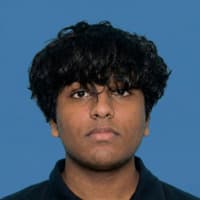 № 013Exhibit A
The Setup
Aayam Bansal grew up in Kolkata, publishing research out of Delhi Public School Ruby Park and even co authoring an arXiv paper on Twitter sentiment analysis for fashion trend forecasting. His first taste of the problem came the hard way, when a paper he co wrote with Ishaan Gangwani was rejected by the Association for Computational Linguistics and they spent nights wrangling LaTeX templates and conference formats instead of doing actual science.
Instead of shrugging, Bansal turned the pain into a product insight: the real bottleneck in modern science was not ideas, it was the sludge of formatting, peer review prep, and repetitive experiment setup. He and Gangwani started with InkVell, an AI native LaTeX editor and research operating system, and pushed it far enough from India to win an EV grant and then a spot in Y Combinator's Winter 2026 batch, which gave them capital, a Bay Area landing pad, and a direct line into frustrated researchers.
The Evidence
Reporting from Economic Times, VnExpress, and the New York Post all converge on the same numbers: by age 18, Bansal and Gangwani had raised roughly $1.5 million for their company, including $500,000 from Y Combinator. YC itself later highlighted Synthetic Sciences publicly, describing it as AI co scientists for end to end research with a biology mode that scores 92 percent on the BixBench Verified benchmark, which is a concrete performance signal researchers respect.
Media coverage makes clear that this was not a friends and family round propped up by hype. The pair went from high school and Indian research labs to San Francisco, skipped or dropped out of college, and used their YC batch to launch Synthetic Sciences in front of real domain experts. Their platform now helps researchers automate tasks like literature review and experiment design, and Bansal repeatedly emphasizes in interviews that investor skepticism flipped only when he could walk people through rigorous demos and show how the workflows mapped directly to what labs already do every day.
The Mechanism
Strip the story to its operators and three moves explain how Aayam Bansal got Synthetic Sciences funded and adopted:
1. Start with a niche research pain, then zoom out to an OS. Bansal did not pitch a generic AI assistant, he started with the very specific hell of LaTeX errors and conference submissions that he personally lived, built InkVell to fix it, then expanded into a broader operating system for scientific work once he had credibility and user pull.
2. Convert academic rejection into a distribution wedge. The rejected ACL paper was not just motivation, it was a compass for who to sell to and how to talk to them, so he targeted researchers who had lived the same conference workflow, used their own writing and arXiv presence as proof of empathy, and got warm intros through professors and research communities that already trusted him.
3. Use YC and benchmarks as trust engines. As teenagers, they could not out credential veteran founders, so they engineered substitutes: Y Combinator as a public stamp of seriousness, a 92 percent BixBench Verified score as an objective performance claim, and highly prepared demos that walked investors and scientists through end to end experiments so the conversation shifted from age to capability.
The Steal
- Mine your most annoying workflow for a starting wedge and build the smallest credible tool that fixes that pain for people exactly like you.
- Treat rejections from conferences, employers, or customers as user interviews in disguise and use the specifics of that failure to sharpen your pitch and targeting.
- If you lack pedigree, over compensate with third party proof like accelerators, public benchmarks, and meticulous demos that map line by line to a buyer's real workflow.
Case Questions
- How did Aayam Bansal grow Synthetic Sciences?
- Aayam Bansal grew Synthetic Sciences by starting from his own research pain, first with InkVell as an AI native LaTeX editor, then iterating into a broader AI co scientist for end to end research. He and co founder Ishaan Gangwani used their arXiv work, professor network, and Y Combinator's Winter 2026 batch to get in front of real researchers, and they anchored credibility around measurable performance like a 92 percent BixBench Verified score and rigorous live demos instead of marketing fluff.
- How old is Aayam Bansal and where is he based?
- Reporting from outlets like Economic Times and VnExpress describes Aayam Bansal as 18 years old when he entered Y Combinator's Winter 2026 batch. He grew up in Kolkata in India and later based himself in San Francisco to build Synthetic Sciences alongside his co founder while working with US and global research labs.
- How much funding has Synthetic Sciences raised?
- Synthetic Sciences has raised about $1.5 million in funding, according to coverage in VnExpress and the New York Post, which includes a $500,000 investment from Y Combinator as part of the Winter 2026 batch. That capital came after early traction with their research tooling, an initial EV grant, and a pivot from InkVell to a broader AI co scientist platform that resonated with investors focused on scientific productivity.
- What does Synthetic Sciences actually do?
- Synthetic Sciences builds AI co scientists that support end to end scientific research, including automating literature review, helping design and analyze experiments, and handling the boilerplate that usually eats a scientist's day. Y Combinator describes its biology mode as state of the art on the BixBench Verified benchmark, and media profiles emphasize that researchers use it as a workflow layer on top of existing tools rather than as a toy chatbot on the side.
Evidence Log
- VnExpress International profile on teenage AI founders
- Economic Times on InkVell and Y Combinator W26
- Kolkata Calling feature on teenagers taking InkVell to YC
- New York Post article on teen AI startup founders
- Y Combinator LinkedIn post announcing Synthetic Sciences
- Aayam Bansal LinkedIn
- arXiv paper on Twitter sentiment and fashion trends by Aayam Bansal