Avy Agrawal
Age 0 · San Francisco, United States · founder of Axiom
$264M into an AI research copilot and Avy Agrawal got there by shipping what mathematicians actually used, long before most people took a teenage founder seriously.
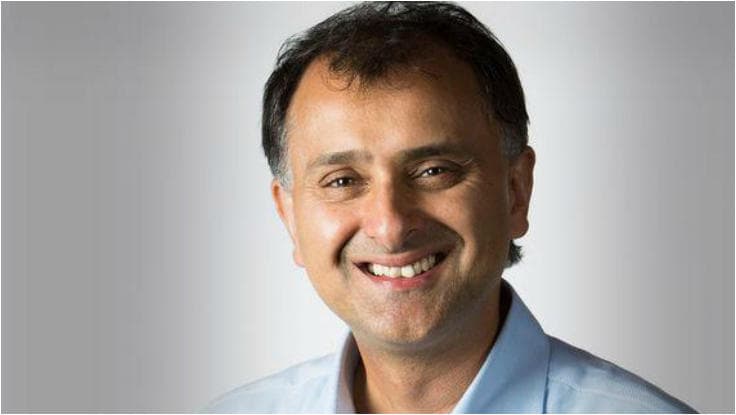 № 040Exhibit A
The Setup
Before Axiom, Avy Agrawal had already tested her instincts for distribution as a teenager. At 16 she built QuizBee, grew it to 500 users, and even sold another internal tool to her school, which forced her to think about real buying decisions instead of just hacker friends clicking a link.
The pushback came early. Teachers and adults told her to focus on school and framed ambitious builds as a distraction, but she treated shipping product as the primary way to learn. That bias toward live users over theoretical credentials later made it easier to ignore prestige pressure and leave Stanford when the opportunity to build Axiom for working researchers became real.
The Evidence
Axiom started with one brutally specific user: mathematicians who needed a faster way to test ideas, explore proofs, and attack open problems. Agrawal did not pitch a vague AI platform, she pitched a tool that fit directly into a researcher workflow and promised more theorems explored per hour, which is the metric those users actually feel day to day.
That clarity of use case became the recruiting wedge. Researchers from Meta FAIR, Google Brain, and other elite labs signed up to help, not because of marketing polish, but because the product targeted a pain they recognized from their own notebooks. Once Axiom had that credibility with top technical talent, it was easier to convince investors that this was not just a niche academic toy but the seed of a general purpose research engine that could later expand into finance and other analytically heavy fields.
The Mechanism
1. Start with a narrow, high value workflow. Agrawal chose mathematicians and serious researchers as the first customer, then designed Axiom around testing ideas and proving results faster, which meant the early product had a clear success metric instead of generic AI wow factor.
2. Use real users as your distribution story. By bringing in contributors from Meta FAIR, Google Brain, and similar labs, she turned early adopters into a proof of quality that investors and future customers could instantly recognize, so each new collaborator became both product input and marketing asset.
3. Sell the expansion narrative only after winning a core. The fundraising story did not stop at math research but it was grounded in that initial traction, and the pitch to investors was essentially that the same engine that helps researchers reason about proofs could be aimed at domains like finance, which made the leap from focused tool to billion dollar platform feel like a logical next chapter instead of hype.
The Steal
- Pick a user segment where a small speedup is life changing, like researchers or traders, then design the product around their daily bottlenecks instead of broad AI capabilities.
- Recruit a handful of deeply credible power users and collaborators, and make their affiliation part of your public story so your customer list doubles as your marketing page.
- Anchor your fundraising narrative in one proven workflow and metric, then show a believable path where the same engine expands into adjacent markets without hand waving.
Case Questions
- How did Avy Agrawal grow Axiom?
- Avy Agrawal grew Axiom by starting with a narrow but intense use case, mathematicians and researchers who needed to test ideas and prove results faster, and building directly for that workflow. She then brought in researchers from Meta FAIR, Google Brain, and similar labs, which created both a feedback loop on the product and a strong credibility story for investors. With that base, she could plausibly pitch Axiom as a research engine that would later expand into areas like finance, which helped unlock substantial funding.
- How much funding has Axiom raised?
- Axiom has raised $64 million in seed funding followed by a $200 million Series A. Those rounds were justified around a vision where the core technology used for mathematical and scientific research could generalize into other high value analytical domains. The funding story rested on clear traction with serious researchers, not just a slide deck about generic AI disruption.
- What does Axiom do?
- Axiom is an AI research copilot that helps mathematicians and scientists explore ideas, test conjectures, and move through proof or analysis work more quickly. Instead of being a general chat interface, it is built to sit inside a research workflow and augment the way experts reason about complex problems. The long term ambition is that the same core engine that helps on math and science can be adapted to domains like finance where structured reasoning over complex systems also matters.
- How did Avy Agrawal get started as a founder?
- Avy Agrawal started by building AI products as a teenager, including QuizBee which she grew to 500 users and another tool she sold to her school. Those early projects taught her how to ship quickly, talk to users, and ignore people who dismissed her as too young to build something real. That experience made it easier to leave Stanford to pursue Axiom when she saw that researchers were willing to use and help build the product.