Dhravya Shah
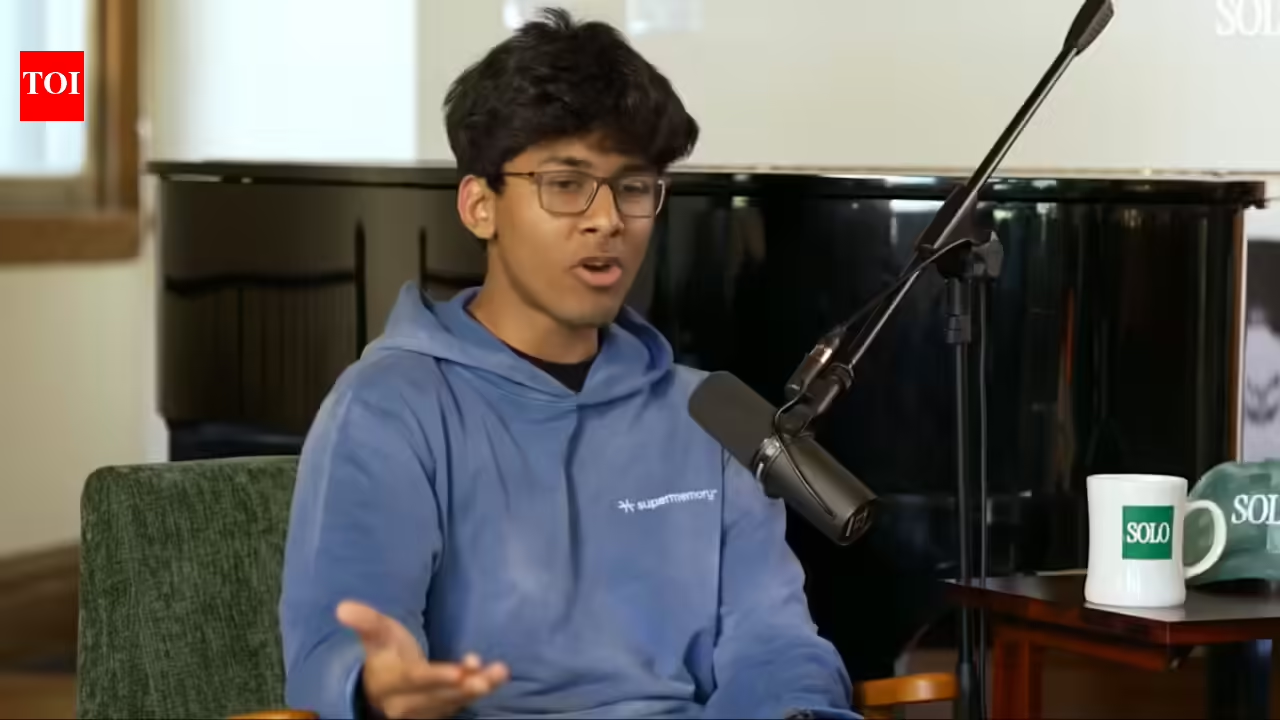
Age 19 · Mumbai & Phoenix · founder of Supermemory
A dorm room side project that started as an open source “second brain” rocketed to 26K+ GitHub stars and over 1M SDK downloads, then pulled in $3M from investors at OpenAI, Google, and Cloudflare before the founder turned 20.
 № 022Exhibit A
The Setup
Dhravya Shah grew up in Mumbai aiming for the standard IIT path, but his real education happened online as he shipped projects and small products as a teenager. Before he turned 18 he had already sold a Twitter automation tool and then a second company, which taught him that fast iteration, not credentials, is what pulls real users and buyers.
At Arizona State University he forced a brutal shipping cadence on himself, building one new project every week for roughly 40 weeks. One of those experiments, a consumer app called Any Context, let people chat with their own data and quietly became a breakout open source project on GitHub, which later evolved into Supermemory.
The Evidence
Supermemory started in 2024 as a hackathon style second brain app, then quickly hit the GitHub trending charts as developers starred and forked it, pushing it past 10K and eventually into the tens of thousands of stars. Its open source SDKs crossed more than 1M downloads, a signal that real teams were wiring it into production workflows rather than just bookmarking a cool repo.
That traction turned a solo dorm room project into a venture scale story. Shah reframed Supermemory as a universal memory and context API for AI agents, raised about $2.6M to $3M in seed funding led by Susa Ventures with participation from Browder Capital and SF1.vc, and pulled in strategic angels like Google AI chief Jeff Dean, Cloudflare CTO Dane Knecht, DeepMind product leader Logan Kilpatrick, and DoNotPay founder Joshua Browder. Along the way he secured a US O-1 visa, which is effectively a credential that lets him stay close to investors and customers in the US AI ecosystem.
The Mechanism
Under the headlines, three moves explain how Supermemory went from GitHub toy to funded infrastructure:
1. Shah started with open source gravity instead of cold outbound. By shipping Any Context as a free, hackable GitHub repo and iterating in public, he let developers discover him organically through trending lists, stars, and clones. Each new feature and commit was marketing, and the usage data told him exactly which workflows had real pull.
2. He narrowed the story to an urgent infrastructure problem that serious AI teams already felt. Rather than stay a vague productivity app, he positioned Supermemory as the missing long term memory layer for AI agents and copilots, with concrete integrations for chats, emails, documents, and app data streams. That positioning turned GitHub users into early design partners and made it easy for investors from OpenAI, Google, and Cloudflare to see how it could sit in the stack.
3. Shah used speed and direct outreach to convert believers into a cap table and distribution. He shipped dozens of prior OSS projects, which gave him the credibility to DM heavyweights like Joshua Browder and Logan Kilpatrick on X with working demos, not decks. Those angels then became public validators who tweeted, wrote, and talked about Supermemory, which looped more developers into the repo and gave him the social proof needed to close a venture round and win the O-1 visa.
The Steal
- Treat GitHub like your first growth channel: ship an actually useful repo, iterate in public, and let stars, forks, and downloads tell you where the real demand is.
- Reposition side projects around one painful, infrastructure level problem that serious teams already complain about so your product becomes a must have layer, not a nice to have app.
- Use shipping speed as your pitch: reach out directly to operators and investors with live demos, measurable traction, and a clear before after story so they are betting on momentum, not potential.
Case Questions
- How did Dhravya Shah grow Supermemory?
- Dhravya Shah grew Supermemory by first launching it as an open source second brain called Any Context, which climbed GitHub trending lists and accumulated tens of thousands of stars and over a million SDK downloads. He used that developer pull to reposition the project as a universal memory API for AI agents, then deliberately courted influential angels and funds who could both invest and distribute the story into the AI ecosystem.
- How old is Dhravya Shah?
- Reports from Indian and US outlets describe Dhravya Shah as 19 years old when he raised around $3 million for Supermemory and secured his US O-1 visa. Before turning 20 he had already launched more than 15 open source projects and sold two companies, which gave him leverage when he moved into serious AI infrastructure.
- How much funding has Supermemory raised?
- Supermemory has raised roughly $2.6 million to $3 million in seed funding, with Susa Ventures leading the round and participation from Browder Capital and SF1.vc. The cap table also includes strategic angels like Google AI head Jeff Dean, Cloudflare CTO Dane Knecht, DeepMind product leader Logan Kilpatrick, and DoNotPay founder Joshua Browder.
- What does Supermemory do?
- Supermemory provides a universal memory and context layer for AI applications and agents so they can store and recall unstructured data over time. It can ingest chats, emails, PDFs, files, and app data streams, then expose that history through SDKs and tools like a chatbot or notetaker that plug into platforms such as Google Drive, OneDrive, and Notion.
Evidence Log
- Times of India — profile on Dhravya Shah and Supermemory
- Economic Times — IIT dropout builds AI memory startup
- YouTube — Sold a Company at 16, Raised $3M at 19 | Dhravya Shah, Supermemory
- ASU Entrepreneurship — feature on Dhravya Shah and Any Context
- Analytics India Magazine on LinkedIn — Supermemory funding and product details
- Startup Pedia on LinkedIn — $3M funding and investor stack
- Instagram — startups_media post on Supermemory seed round