Kairan Quazi
Age 17 · New York City, United States · quant developer at Citadel Securities
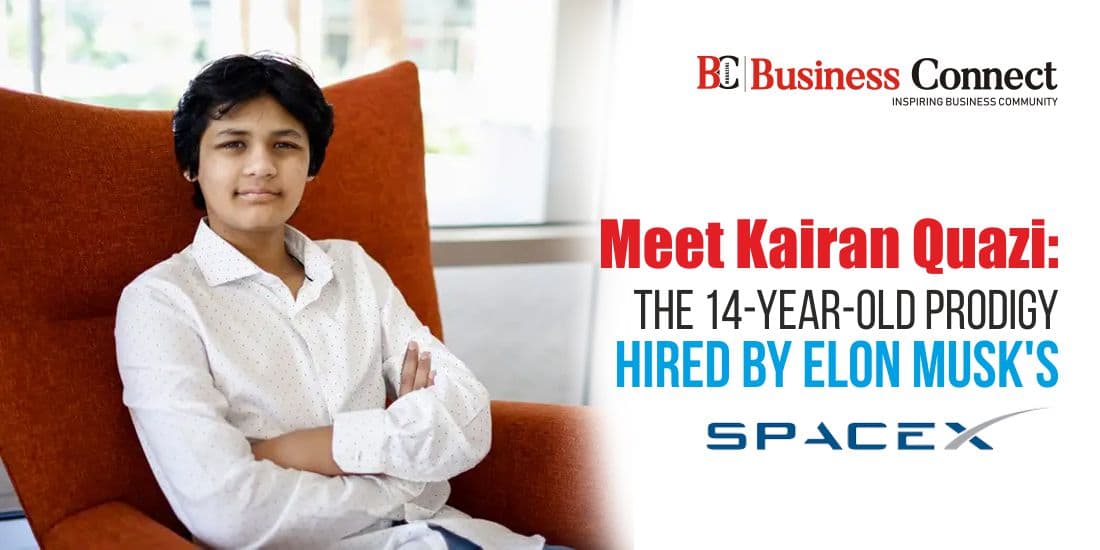
A 16 year old who started college at 9 and became SpaceX’s youngest engineer at 14 used that resume to jump straight into Citadel Securities, one of the hardest quant seats to crack on Wall Street.
 № 016Exhibit A
The Setup
Kairan Quazi did not treat school as the main product. By nine he had already moved beyond a normal K 12 track and was taking college level classes, then graduated from Santa Clara University’s School of Engineering at 14 as its youngest ever graduate and walked straight into a full time Starlink engineering role at SpaceX in Redmond. That early credential stack meant that by the time most teens touch their first AP class, he had production experience shipping code on a live satellite internet system with real world performance constraints.
Long before Citadel entered the picture, he had already built a public narrative around AI and high impact engineering. At 10 he interned in Intel Labs’ Human AI group, contributing to predictive speech tech inspired by Stephen Hawking, and Santa Clara University documented that journey as a flagship story, which quietly functioned as long term SEO and social proof. Those writeups, plus mainstream coverage of the 14 year old SpaceX hire, gave him a durable personal brand that hiring managers and recruiters in finance and tech could instantly recognize and trust.
The Evidence
The visible inflection comes when he chooses where to spend his compounding credibility. After two years at SpaceX, he did not simply hop to another big tech logo, he went straight into Citadel Securities in New York as a quant developer, a seat typically reserved for PhDs and battle tested engineers. Business Insider, Fortune, Morning Brew and niche communities like the Muslims Achieving Excellence Network all amplified the same storyline: youngest engineer at SpaceX turns down offers from top AI labs, Big Tech and other quant firms to join Ken Griffin’s trading shop.
Citadel’s own materials and media coverage frame his move as a deliberate bet on a tighter feedback loop environment, not just prestige chasing. He explicitly contrasted the long research cycles of AI labs with the rapid, measurable impact of systematic trading, which signaled to finance leaders that he understood the game they were playing. By the time he relocated to an apartment a short walk from Citadel’s Park Avenue office, the story of a teen who had already shipped for Intel’s AI lab and SpaceX had turned into an inbound magnet, with the firm positioned as the place that could fully exploit his mix of engineering depth and appetite for performance driven work.
The Mechanism
1. Stack real projects in public, then let institutions package the story for you. Kairan’s internships and roles at Intel Labs, Santa Clara University and SpaceX all produced institutional writeups that Google well and explain his contributions in plain language, which later functioned as a persistent pitch deck for any recruiter who typed his name into a browser.
2. Treat each role as leverage on the next, not an endpoint. Instead of viewing SpaceX as the pinnacle, he used the credibility of being Elon Musk’s youngest Starlink engineer as a bargaining chip to access an entirely different high stakes arena in quant finance, where that badge signaled he could handle complex distributed systems and intense engineering cultures.
3. Frame your career move as a thesis about feedback loops and impact. In interviews and public posts he did not say he was running away from AI, he said quant finance gives AI level intellectual rigor with faster, visible results, which resonated with Citadel’s own narrative and made him sound like a cultural fit who understood why their environment is attractive to builders.
The Steal
- Aim your early work at institutions that publish stories about you, because a university profile or lab article that ranks on Google can quietly sell you for years.
- Use each prestigious role as a stepping stone into a new domain where that specific logo and experience are rare, so your background becomes an unfair advantage instead of just another good resume.
- When you pivot fields, articulate a clear thesis about why the new environment fits your obsession with impact and feedback, so top shops see you as a strategic hire, not a wandering prodigy.
Case Questions
- How old is Kairan Quazi?
- Kairan Quazi was born on January 27, 2009 in Pleasanton, California, and media reports list him as 16 when he joined Citadel Securities as a quant developer in New York. That puts him in his mid teens while already holding two full time roles that most engineers only reach post degree and post PhD.
- How did Kairan Quazi grow his career from SpaceX to Citadel Securities?
- He grew his career by turning a sequence of unusually early technical experiences into a public track record that hiring managers could easily verify. After early exposure at Intel Labs and graduating from Santa Clara University at 14, he spent two years as a Starlink engineer at SpaceX, then used that combination of AI related work and production scale systems experience to make a credible jump into a quant developer role at Citadel Securities, which values both heavy math and high performance engineering.
- What does Kairan Quazi do at Citadel Securities?
- Kairan joined Citadel Securities in New York as a quant developer, working inside a systematic trading environment where code and models directly shape trading strategies and execution. Public comments from him and the firm describe the role as blending the complexity of AI research with the fast feedback of live markets, where impact is visible in days instead of months or years.
- Why did Kairan Quazi choose quant finance over AI labs or Big Tech?
- In interviews and profiles he has said that quant finance offers the same level of intellectual rigor he saw in AI research but with a much faster pace and clearer, measurable impact. That framing helps explain why he turned down offers from top AI labs, Big Tech companies and other quant firms to join Citadel Securities, which he viewed as a high performance environment aligned with how he wants to apply his engineering and math skills.
Evidence Log
- Wikipedia — Kairan Quazi profile
- Santa Clara University — Kairan Quazi’s journey to Starlink engineer
- Business Insider via LinkedIn — Quazi joins Citadel Securities as quant developer
- MAX Network on LinkedIn — Announcement of Kairan Quazi joining Citadel Securities
- Fortune — Teen prodigy Kairan Quazi leaves SpaceX for Citadel Securities
- Morning Brew Facebook post — From SpaceX to Citadel Securities