Onkar Singh Batra
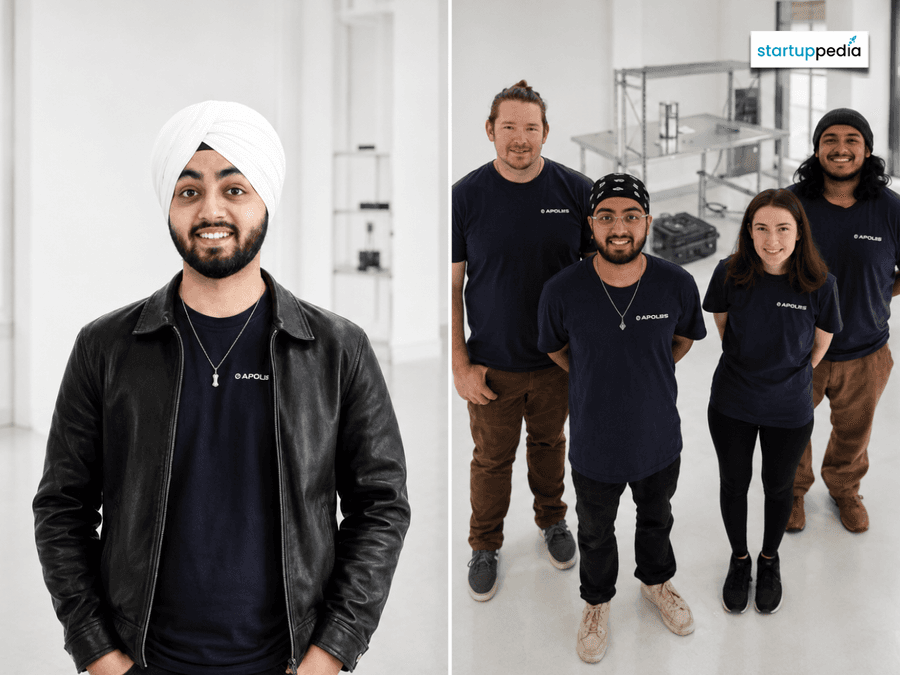
Age 20 · Silicon Valley, USA · founder of Apolink
$4.3 million raised by 19 to fix satellite blackouts in low Earth orbit, turning a school science project from Jammu into a Y Combinator backed space network valued at $45 million.
 № 075Exhibit A
The Setup
Onkar Singh Batra did not start with space, he started with shipping. At seven he built a website that earned a Guinness World Records mention as the youngest male webmaster, then by twelve he had published a book and by thirteen he was already running a small company, which meant he learned early how to finish projects and put them in front of real users instead of keeping them as school side quests.
At sixteen, while still in Jammu, he worked on InQube, described as one of India’s first open source satellites, and that experience exposed him to a gnarly systems problem in low Earth orbit: satellites regularly drop out of contact whenever they move out of line of sight of ground stations, which silently kills uptime and data quality. That specific pain point became his wedge, because it was narrow enough to understand deeply yet big enough that every operator in LEO has to care about it. By nineteen he had moved to Silicon Valley, framed Apolink around fixing that connectivity gap, and started speaking the language of customers who depend on real time satellite links instead of generic space hype.
The Evidence
Apolink is not a student club project, it is a funded space infrastructure bet. By the time Onkar was nineteen he had closed a 4.3 million dollar seed round for Apolink, backed by Y Combinator, 468 Capital and Unshackled Ventures, with coverage noting a post money valuation around 45 million dollars and more than 140 million dollars in letters of interest from potential customers. That stack of committed interest is the real tell, investors are following a pipeline of serious operators who want more reliable in orbit connectivity instead of just a charismatic young founder story.
He also built a credibility trail that compounds. National media in India highlighted the arc from Guinness record as a child to building satellites as a teenager to raising millions from Silicon Valley investors before twenty, which gives him asymmetric attention when he reaches out to customers, potential hires, or partners in the space ecosystem. The pattern across profiles is that Apolink is framed around a very concrete failure mode in LEO communication, not vague ambition about space, and that clarity makes it easier for investors and users to quickly slot the company into their mental map of the industry.
The Mechanism
1. Compound proof of work before asking for capital. By the time he pitched Apolink, Onkar could point to a website launched at seven, a book at twelve, a company at thirteen, and satellite work at sixteen, so investors saw a decade long pattern of technical shipping rather than a first time teenage idea, which shortened trust building and made the seed round about scaling, not about whether he could execute at all.
2. Start from a narrow, painful systems problem. Instead of selling a vague vision of space, he anchored Apolink around a specific operational failure in low Earth orbit, satellites going dark when they leave ground station view, and that let him have focused conversations with operators, convert those into over 140 million dollars worth of letters of interest, and then walk into YC and seed pitches with real demand signals in hand.
3. Leverage narrative to unlock top tier distribution. The story of a Jammu schoolkid building satellites, moving to Silicon Valley by nineteen, and raising millions from Y Combinator and global funds is intrinsically shareable, so he leaned into media coverage and social content that spelled out the journey, which in turn pulled in inbound from investors, partners, and early customers who felt they were discovering the next breakout space infrastructure founder rather than being cold sold.
The Steal
- Stack a visible trail of shipped projects long before your big raise so investors and customers are buying into a pattern, not a promise.
- Phrase your startup around one brutally specific pain point in the stack so potential users can immediately see where it fits and you can convert conversations into concrete commitments like letters of intent.
- Use your personal narrative as a distribution channel, give media and social audiences a clear before and after arc so each article or clip does real work filling your pipeline and warming future investors.
Case Questions
- How old is Onkar Singh Batra?
- Reports describe Onkar Singh Batra as twenty years old while he is building Apolink full time out of Silicon Valley. He had already raised his seed round by nineteen, after spending his teens shipping web projects, writing, and working on satellite hardware from Jammu.
- How did Onkar Singh Batra grow Apolink?
- Onkar grew Apolink by starting from a sharp technical insight about satellite communication gaps gained while working on the InQube satellite, then turning that into a focused product narrative about fixing low Earth orbit blackouts. He used that clarity to secure letters of interest worth over 140 million dollars from potential customers and leveraged those commitments, plus his long track record of shipping, to win backing from Y Combinator and seed investors.
- How much funding has Apolink raised?
- Apolink has raised 4.3 million dollars in seed funding from investors that include Y Combinator, 468 Capital and Unshackled Ventures. Coverage around the round cites a valuation of approximately 45 million dollars and mentions that the company has secured more than 140 million dollars in letters of interest tied to its planned satellite connectivity network.
- What does Apolink do?
- Apolink is a space technology startup focused on solving communication blackouts for satellites in low Earth orbit. The company is working on an in orbit network that keeps satellites connected even when they are out of direct line of sight of ground stations, which aims to improve uptime and reliability for operators that depend on continuous data links.