Riya Mehta
Age 16 · Toronto, Canada · founder of Flo
By turning procurement teams into an AI powered workforce that CFOs would rather hire than headcount, 16 year old Riya Mehta turned a niche back office pain into a funded product with real enterprise demand.
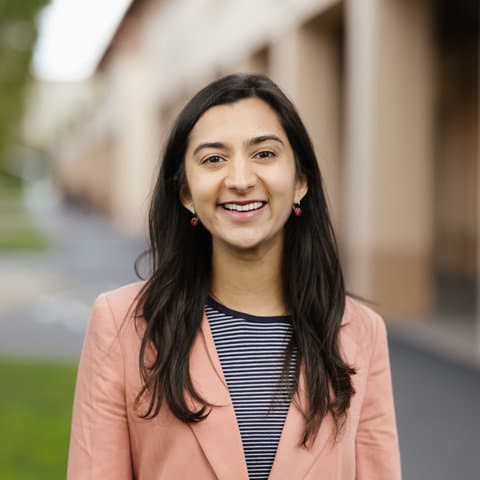 № 042Exhibit A
The Setup
Before Flo, Riya Mehta was already deep in applied AI, working as an artificial intelligence and genomic researcher at the Hospital for Sick Children, where she explored how machine learning could change the future of genomics. That work forced her to think in systems, to understand how data, models and human decisions had to mesh if you wanted real world outcomes instead of just nice looking papers.
She carried the same lens into global health and emerging tech, building AR and VR concepts for developing countries and thinking about access, infrastructure and constraints instead of shiny demos. That combination of research depth and obsession with deployment primed her to see procurement not as a boring cost center, but as a messy workflow problem where AI could quietly eat the repetitive work humans were never meant to do.
The Evidence
Flo was positioned around a blunt signal from the market, not a founder fantasy: after years of watching procurement across hundreds of companies, teams stopped asking for better software and started telling CFOs they just could not hire three more people. The core insight was that no one wanted another dashboard, they wanted a workforce that could execute, so she framed Flo as AI that does procurement work end to end instead of yet another tool to click around in.
To get credibility and users, Riya leaned into a retention first mindset that she had already articulated publicly, arguing that the smartest teams do not ask how to acquire faster, they ask how to make every user worth more for longer. For Flo, that translated into deeply embedding with early customers, building exactly around their recurring tasks, and using those live, retained accounts as proof points when talking to partners and investors who were skeptical of yet another AI procurement pitch.
The Mechanism
1. Start from lived workflow, not a feature wishlist. By grounding Flo in years of procurement operations and the specific sentence CFOs were repeating about headcount, she skipped generic AI tooling and built a product promise that mapped cleanly to budget approvals and urgency.
2. Treat retention as the growth engine. Instead of chasing vanity signups, she focused on making each early customer stick, pushed the product into the center of their daily procurement routines, and then used those long lived accounts as case studies and warm intros into adjacent companies that trusted the same operators.
3. Sell a workforce, not a tool. In pitches and messaging she did not market Flo as a dashboard or assistant, she framed it as an AI workforce that could replace incremental hires, which turned her into a line item in the headcount conversation and unlocked partnerships and funding from stakeholders who cared about cost structure more than software aesthetics.
The Steal
- Anchor your AI product on a sentence real buyers are already saying about headcount, budget or burnout, then make your offering the obvious answer to that sentence.
- Design onboarding and features around retention first, sit with a handful of customers until your product becomes part of their daily workflow, and let their continued usage do the heavy lifting for both distribution and fundraising.
- Pitch the outcome in balance sheet language, like replacing hires or unlocking new capacity, instead of selling abstract AI features that never make it into the CFO conversation.
Case Questions
- How old is Riya Mehta?
- Riya Mehta describes herself as a 16 year old global health innovator, lifelong learner and technology enthusiast on her personal site. She built her AI research and product work, including Flo, while still in her teens.
- What does Flo by Riya Mehta do?
- Flo is positioned as an AI driven procurement workforce that takes on the repetitive, manual work that procurement teams and CFOs were tired of hiring more people to handle. Instead of just adding features on top of existing tools, it focuses on automating the end to end tasks that keep spend under control so companies can avoid expanding headcount for routine purchasing workflows.
- How did Riya Mehta grow Flo?
- Riya grew Flo by starting from deep procurement context, listening to CFOs who said they did not need better software but needed to avoid hiring more people, then building around that exact pain. She focused on retention over acquisition, embedded tightly with early customers so Flo handled critical daily workflows, and used those sticky accounts and their outcomes to win both partnerships and funding.
- What is Riya Mehta known for outside Flo?
- Outside Flo, Riya is known for her work as an artificial intelligence and genomic researcher at the Hospital for Sick Children, where she explores applications of AI in genomics. She has also worked on AR and VR based models for developing countries and positions herself as a global health innovator focused on solving pressing problems with technology.