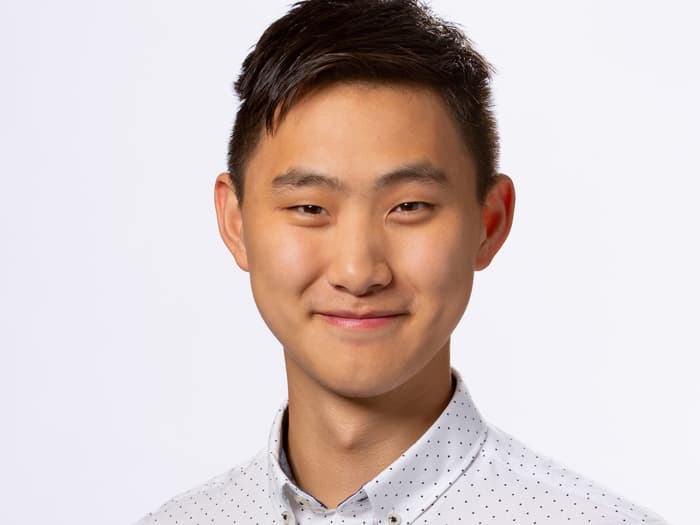
Alexandr Wang
Age 29 · Menlo Park, United States · cofounder of Scale AI, chief AI officer at Meta
A 19 year old in a pool house turned a data labeling API into a $14.3 billion keystone deal that put him in charge of Meta's entire AI strategy.
 № 015Exhibit A
The Setup
Alexandr Wang did not start with a flashy AI demo. In 2016 he and Lucy Guo used Y Combinator as a forcing function to ship a boring but brutal bottleneck tool, an API that turned armies of human labelers into clean labeled data for teams at Uber, Alphabet and other early machine learning customers. By positioning Scale AI as infrastructure that sat underneath everyone else's models, he tapped demand from teams already desperate for help, instead of trying to invent a new use case.
He leaned into operational grind rather than pure research glamour. Scale quietly hired tens of thousands of workers to annotate images, text, speech and video, then wrapped that labor pool in software and SLAs that enterprise buyers understood. That unsexy machinery created a wedge into the budgets of companies that would later need reinforcement learning pipelines, model evaluation and red teaming, giving Scale a front row seat to the generative AI wave years before it was obvious.
The Evidence
The funding trail shows how that wedge compounded. Scale AI left YC in 2016 and within a few years was powering training data for customers like OpenAI, SAP and Toyota, which translated directly into revenue proof for investors who cared more about production deployments than hype. By 2021, a funding round that valued Scale north of $7 billion briefly made Wang the world's youngest self made billionaire in his mid twenties, and a 2023 Series F at around $13.8 billion cemented Scale as core AI plumbing, not a side bet.
The Meta relationship is the clearest signal of distribution power built through this infrastructure first strategy. In 2025 Meta committed roughly $14.3 billion to Scale as part of a broader deal and then hired Wang as chief AI officer to lead its Superintelligence Labs, effectively turning a former vendor CEO into the person running AI across Facebook, Instagram and WhatsApp. That outcome only made sense because Scale had already become the quiet standard for model evaluation and data pipelines among the very companies racing to win generative AI.
The Mechanism
1. Start with the ugliest bottleneck and own it completely. Instead of chasing headline grabbing models, Wang built Scale AI around the least glamorous part of AI, high quality labeled data and evaluation, then industrialized that layer with software plus a massive global workforce. This gave him recurring touch points with every serious AI team and taught Scale exactly where the real pain and budget sat.
2. Turn services into infrastructure, then into leverage. Early on, Scale looked like a managed labeling shop, but Wang kept pushing toward APIs, tooling and programmatic quality controls that made their human work feel like a programmable resource. Once embedded as a system of record for training and evaluation, Scale could layer on higher margin offerings like reinforcement learning pipelines and safety testing that were far harder for customers to rip out.
3. Use enterprise customers as both cash flow and proof of work. By landing accounts like OpenAI and major automakers, then shipping production grade data work instead of slideware, Wang turned each deployment into social proof he could parade in fundraising and biz dev. That evidence of being inside real world AI stacks set up the Meta deal, where Scale's track record as a neutral infrastructure provider made it less risky for Meta to trust Wang with a multibillion dollar partnership and its internal AI roadmap.
The Steal
- Solve the dirty bottleneck your heroes ignore, like data labeling or evaluation, and make it so reliable that the flashier players have to build on top of you.
- If you start as a service, obsess over productizing every repetitive workflow into an API or tool so customers slowly wake up to find you are infrastructure, not a vendor.
- Treat every marquee customer as a case study engine, design the work so their success stories can be retold in fundraising decks and partnership pitches that unlock your next tier of leverage.
Case Questions
- How did Alexandr Wang grow Scale AI?
- Alexandr Wang grew Scale AI by attacking the unglamorous core problem in machine learning, clean labeled data and rigorous model evaluation, and delivering it as an API plus software layer. He used early traction with customers like Uber, Alphabet and later OpenAI and large enterprises to create recurring revenue and proof that Scale sat in the critical path of real AI deployments, which in turn attracted progressively larger funding rounds. By the time generative AI exploded, Scale was already embedded in customers' training and evaluation workflows, giving Wang leverage to expand into reinforcement learning, safety testing and eventually the Meta partnership.
- How old is Alexandr Wang and when did he start Scale AI?
- Alexandr Wang was born in January 1997 and was 19 when he cofounded Scale AI during the summer 2016 Y Combinator batch. That timing meant he was in his early twenties when the company hit unicorn status and in his mid twenties when a multibillion dollar funding round briefly made him the youngest self made billionaire in the world.
- What does Scale AI actually do?
- Scale AI provides data labeling, tooling and model evaluation services that help companies train and monitor artificial intelligence systems. The company coordinates large workforces and custom software to annotate images, text, audio and video, then layers on services like reinforcement learning, red teaming and safety checks so customers can reliably deploy models in production. In practice that means Scale sits under the hood of many well known AI projects, turning messy raw data into something models can learn from and be judged against.
- What was the deal between Scale AI and Meta, and what is Alexandr Wang's role there?
- In 2025 Meta committed roughly $14.3 billion to work with Scale AI as part of a wider partnership that effectively locked in Scale as a central infrastructure provider for Meta's AI push. As part of that shift, Wang stepped into the role of chief AI officer at Meta and now leads its Superintelligence Labs, directing strategy and research for the company's core AI models while Scale continues operating as a separate business focused on data and evaluation for a broad customer base.
Evidence Log
- Wikipedia — Alexandr Wang
- Fortune — Inside the rise of Scale AI cofounder Alexandr Wang and the $14 billion Meta deal
- Observer — Who is Alexandr Wang, the wunderkind billionaire behind Scale AI
- Fortune on LinkedIn — Alexandr Wang is now leading Meta's AI dream
- Forbes — Alexandr Wang profile
- Substack — How a 19-Year-Old Boy Built a $7B+ Business